Prisma has quickly become one of the most popular ORMs in the Node.js ecosystem. Its core promise is simple: type-safe database access, a modern developer experience, and fewer runtime errors—especially in TypeScript-heavy codebases.
In this guide, you will learn how Prisma ORM works, how it fits into real production systems, and how to avoid common pitfalls when using it at scale.
What Prisma Actually Is
Prisma is not a traditional Active Record ORM. Instead, it is a schema-first data access layer built around three main components:
- A declarative schema file
- A generated, type-safe Prisma Client
- An integrated migration system
You define your data model explicitly, and Prisma generates a strongly typed client from that schema. This approach aligns naturally with TypeScript-first development and reinforces concepts discussed in TypeScript vs JavaScript: Key Differences You Should Know.
Why Prisma Became Popular So Fast
Prisma solved several long-standing problems in the Node.js ORM space:
- Compile-time type safety
- Predictable schema evolution
- Clear and readable data models
- Excellent tooling and error messages
Because Prisma generates code instead of relying on runtime reflection, many classes of bugs never make it to production. This philosophy mirrors the structural discipline promoted in Scalable Express.js Project Structure.
The Prisma Schema as a Source of Truth
The Prisma schema defines:
- Models and fields
- Relationships between entities
- Database provider configuration
- Client generators
By centralizing all structural decisions, Prisma reduces drift between application code and the database. This is especially valuable in teams that struggle with schema consistency, a common challenge highlighted in Database Migrations in Production: Strategies and Tools.
Prisma Client and Type Safety
Once the schema is defined, Prisma generates a client that exposes:
- Fully typed queries
- Strongly typed results
- Compile-time validation
Invalid queries fail during development rather than at runtime. For large TypeScript codebases, this significantly reduces debugging time and improves refactoring confidence.
This experience feels closer to working with in-memory objects than issuing raw SQL, while still preserving database constraints.
Working with Relations in Prisma
Prisma models relationships explicitly in the schema. One-to-one, one-to-many, and many-to-many relationships are declared clearly and translated into intuitive client APIs.
While this abstraction improves productivity, it does not eliminate the need to understand how queries are executed. Performance still depends on indexes and query plans, as explained in PostgreSQL Performance Tuning: Indexes, EXPLAIN, and Query Optimization.
Prisma Migrations in Real Projects
Prisma Migrate generates SQL migration files directly from schema changes. This workflow works best when:
- Prisma owns the database schema
- Migrations are applied consistently
- Manual database changes are avoided
In complex environments—shared databases, legacy schemas, or multiple services—you must coordinate migrations carefully. Many of these concerns overlap with practices described in Database Migrations in Production.
Prisma vs Traditional ORMs
Prisma differs from classic ORMs in several important ways:
- Schema-first instead of code-first
- Generated queries instead of dynamic query builders
- Strong compile-time guarantees
Traditional ORMs may offer more flexibility, but often at the cost of runtime errors and weaker typing. Choosing Prisma is an architectural decision, not just a tooling preference.
Performance Considerations with Prisma
Prisma performs well for most workloads, but it does not automatically optimize queries.
Common performance issues include:
- Over-fetching relations
- N+1 query patterns
- Missing database indexes
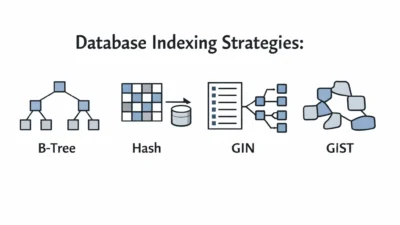
Prisma does not replace sound database design. Indexing strategies from Database Indexing Strategies: B-Tree, Hash, GIN, and GiST still apply fully when using Prisma.
Inspecting generated SQL is essential when performance matters.
Prisma and Connection Pooling
Prisma manages database connections internally, which means it must be aligned with your pooling strategy.
In production systems, Prisma is often combined with PgBouncer to control connection counts and protect PostgreSQL from spikes. This setup follows principles outlined in Database Connection Pooling: PgBouncer, HikariCP, and Best Practices.
Ignoring pooling considerations can lead to connection exhaustion even when queries are efficient.
When Prisma Is a Great Fit
Prisma works particularly well when:
- You use Node.js with TypeScript
- Type safety is a priority
- The schema evolves frequently
- Developer experience matters
It is an excellent choice for greenfield projects and teams that value clarity and correctness.
When Prisma May Not Be Ideal
Prisma may not be the best option when:
- You need highly dynamic or vendor-specific SQL
- Multiple services own the same database schema
- Advanced database features dominate the design
In these cases, lower-level query builders or raw SQL may provide better control.
Prisma in Modern Architectures
Prisma fits naturally into modern stacks:
- REST APIs
- GraphQL backends
- Serverless environments
- Monorepos with shared types
It pairs well with strongly typed APIs, similar to patterns discussed in GraphQL Servers with Apollo and Express.
Common Prisma Mistakes
Teams often run into issues when they:
- Treat Prisma as a black box
- Ignore query execution plans
- Skip migration reviews
- Overuse deeply nested queries
Prisma rewards understanding. Blind usage eventually leads to performance or maintenance issues.
Conclusion
Prisma ORM brings structure, type safety, and modern tooling to Node.js and TypeScript development. It simplifies database access while enforcing better discipline through schema-first design.
A practical next step is to inspect Prisma’s generated SQL for your most important queries. When you understand what Prisma produces under the hood, you can confidently scale it in production without unpleasant surprises.