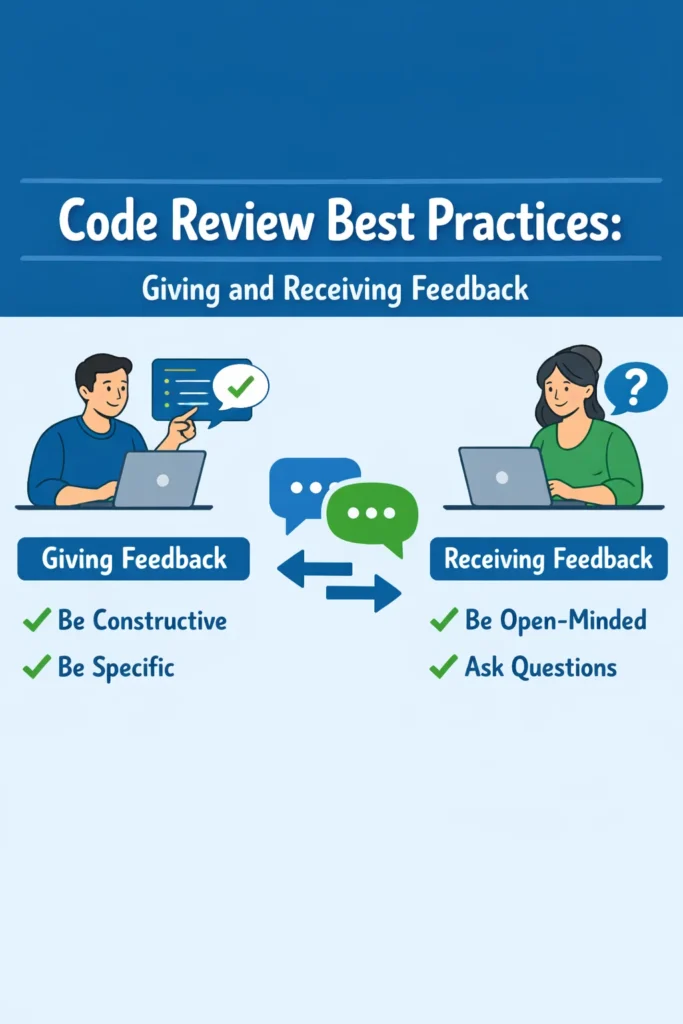
Code reviews sit at the center of healthy engineering teams. They improve code quality, spread knowledge, and prevent bugs from reaching production. However, poorly handled reviews slow teams down and create friction.
In this post, you will learn practical code review best practices—both for giving feedback and for receiving it. The goal is simple: make reviews faster, calmer, and more effective.
Why Code Reviews Matter
Code reviews do more than catch bugs. They:
- Improve readability and consistency
- Share context across the team
- Enforce architecture decisions
- Reduce long-term maintenance cost
Teams that review code well often move faster over time, even if reviews feel slow at first. This aligns closely with ideas from Clean Code in Flutter and similar clean-code principles across ecosystems.
What a Code Review Is (and Is Not)
A code review is not a place to:
- Show authority
- Rewrite everything to personal taste
- Block progress unnecessarily
Instead, a review should:
- Improve correctness
- Improve clarity
- Protect shared standards
Keeping this mindset avoids most conflicts before they start.
Preparing Code for Review
Good reviews start before anyone comments.
Before opening a pull request:
- Keep changes focused and small
- Name commits and PRs clearly
- Explain why changes exist, not just what changed
- Remove debug code and leftovers
Smaller, well-scoped reviews lead to better feedback and faster merges. This mirrors advice from Scalable Express.js Project Structure, where clarity and separation reduce friction.
Giving Good Code Review Feedback
Giving feedback is a skill. Clear feedback improves code without hurting morale.
Focus on the Code, Not the Person
Always comment on the code, never the developer.
Instead of:
“You wrote this badly.”
Say:
“This logic is hard to follow—can we simplify it?”
This small shift keeps discussions technical and productive.
Prioritize What Matters
Not every issue deserves the same weight.
During reviews:
- Flag bugs and correctness issues first
- Highlight clarity and maintainability next
- Treat style issues as secondary
Overloading reviews with minor comments slows teams down and hides real risks.
Explain the Reason Behind Feedback
Feedback works best when reviewers explain why something matters.
For example:
- Performance concerns
- Edge cases
- Future maintenance risk
This approach helps teams learn, not just comply. It also aligns well with architecture-focused discussions like Common Flutter Architecture Mistakes.
Use Suggestions, Not Commands
Use language that invites collaboration.
Helpful phrasing includes:
- “What do you think about…”
- “Would it make sense to…”
- “Could we simplify this by…”
This tone reduces defensiveness and encourages discussion.
Receiving Code Review Feedback Well
Receiving feedback matters just as much as giving it.
Assume Positive Intent
Most reviewers want the codebase to improve. Start from that assumption.
If a comment feels harsh, ask for clarification instead of reacting emotionally.
Separate Ego from Code
Feedback targets the code, not your skill or effort.
Treat reviews as a shared problem-solving exercise. This mindset leads to faster learning and better outcomes.
Ask Questions When Feedback Is Unclear
If you do not understand a comment, ask.
Clarifying questions often uncover deeper design concerns and improve the final result. This behavior supports long-term growth, similar to practices discussed in Pair Programming Over Distance.
Push Back Respectfully When Needed
Disagreement is normal.
When you disagree:
- Explain your reasoning
- Reference constraints or context
- Propose alternatives
Healthy debate improves decisions when handled calmly.
Keeping Reviews Fast and Efficient
Slow reviews frustrate teams and block progress.
To keep reviews moving:
- Review small PRs first
- Set clear expectations for response time
- Avoid reviewing when tired or rushed
Fast feedback loops improve morale and delivery speed.
Code Reviews and Automation
Automation should support reviews, not replace them.
Tools can:
- Enforce formatting
- Run tests
- Catch simple issues
This frees reviewers to focus on logic, structure, and design. CI-driven workflows described in CI/CD for Node.js Projects Using GitHub Actions pair naturally with human reviews.
Common Code Review Mistakes
Teams often struggle when they:
- Nitpick instead of prioritizing
- Delay reviews for days
- Use reviews to enforce personal style
- Avoid giving honest feedback
Recognizing these patterns helps teams correct course early.
Code Reviews in Distributed Teams
Remote teams rely even more on good reviews.
Clear written feedback, context-rich PR descriptions, and respectful tone matter more when face-to-face communication is limited. These practices support the same collaboration goals outlined in Pair Programming Over Distance.
Measuring Code Review Quality
Quality reviews are:
- Timely
- Clear
- Focused on risk and clarity
- Collaborative rather than adversarial
If reviews feel painful, slow, or tense, the process—not the people—likely needs adjustment.
Conclusion
Code review best practices focus on people as much as code. Clear feedback, respectful tone, and shared ownership turn reviews into a strength instead of a bottleneck.
A practical next step is to review your last few pull requests. Ask whether comments improved clarity and correctness—or just added noise. Small changes in review habits often create big improvements in team productivity and trust.


2 Comments