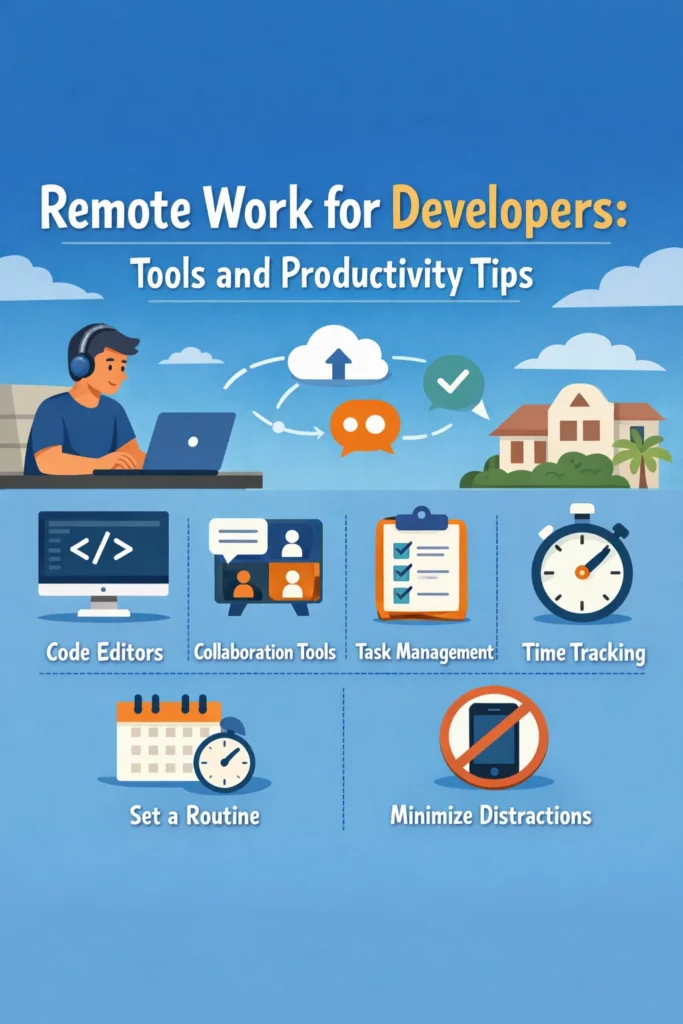
Remote work has moved from a perk to a default for many development teams. While flexibility increases, productivity does not improve automatically. Developers who thrive remotely rely on clear workflows, deliberate tooling, and strong personal discipline.
In this guide, you will learn how to work remotely as a developer without burning out, losing focus, or slowing your team down.
Why Remote Work Feels Harder Than Expected
Remote work removes commute time, but it also removes structure.
Common challenges include:
- Blurred work–life boundaries
- Constant context switching
- Communication delays
- Isolation and burnout
Without intentional habits, remote work often leads to longer hours with less output.
Build a Reliable Daily Structure
Structure matters more than location.
Effective remote developers:
- Start work at consistent times
- Plan tasks before opening Slack
- Define a clear end-of-day boundary
A predictable routine reduces decision fatigue and keeps energy stable throughout the day.
Choose Tools That Reduce Friction
Tools should support focus, not fragment it.
Communication Tools
Async-first communication works best for remote teams.
Use chat for:
- Short updates
- Clarifying questions
- Non-urgent discussions
Use documents or tickets for decisions and specs. This approach aligns well with collaboration principles discussed in Code Review Best Practices: Giving and Receiving Feedback, where clarity beats speed.
Project Management Tools
Clear task ownership prevents confusion.
Good systems:
- Make priorities visible
- Limit work in progress
- Reduce status meetings
Whether you use Jira, Linear, or GitHub Projects, consistency matters more than the tool itself.
Development Environment
Your local setup must stay fast and predictable.
Remote developers benefit from:
- Automated project setup
- Fast builds and tests
- Reliable local tooling
Ideas from VS Code vs Android Studio for Flutter Development: My 2025 Setup apply here even outside Flutter—editor efficiency compounds daily.
Master Asynchronous Communication
Remote teams scale with async communication.
Strong async habits include:
- Writing clear, complete messages
- Sharing context up front
- Avoiding “quick calls” by default
This style protects focus time and supports distributed teams across time zones.
Practices from Pair Programming Over Distance: Tools and Techniques show how collaboration still works without constant meetings.
Protect Deep Work Time
Deep work produces most developer value.
To protect it:
- Block focus time on your calendar
- Mute notifications during coding
- Batch messages instead of reacting instantly
Short interruptions create long recovery costs. Guarding focus improves both quality and speed.
Avoid Over-Meeting
Meetings expand to fill remote schedules.
Healthy remote teams:
- Default to async updates
- Keep meetings short and purposeful
- Cancel meetings without agendas
If a meeting does not lead to a decision or unblock work, it probably does not need to exist.
Remote Code Quality Still Matters
Remote work does not reduce quality expectations.
In fact, it increases the need for:
- Clear code structure
- Good naming
- Strong documentation
Clean, readable code reduces dependency on real-time explanations. Principles from Clean Code in Flutter translate directly to all stacks.
Handle Time Zones Intentionally
Time zones require planning, not improvisation.
Effective strategies include:
- Shared overlap hours
- Async handoffs
- Written decisions
When handled well, time zones increase productivity instead of blocking it.
Prevent Remote Burnout
Burnout happens quietly in remote setups.
Warning signs include:
- Working late every day
- Skipping breaks
- Feeling always “on”
To stay healthy:
- Take real breaks
- Separate work and personal space
- Log off intentionally
Sustainable productivity always beats short-term output.
Remote Work and Career Growth
Some developers fear remote work limits visibility.
In reality, visibility shifts from presence to output.
To grow remotely:
- Share progress clearly
- Document decisions
- Participate in reviews and discussions
These habits also strengthen interview readiness and portfolios, connecting naturally to Building a Developer Portfolio That Gets Noticed.
A Practical Remote Workflow Example
A productive remote day might look like this:
- Morning planning and async updates
- Two focused coding blocks
- One short collaboration window
- Clear shutdown ritual
Simple routines create consistent results.
Common Remote Work Mistakes
Remote developers struggle when they:
- Stay always available
- Skip documentation
- Over-communicate or under-communicate
- Ignore personal limits
Fixing these habits often improves productivity immediately.
Remote Work Is a Skill
Remote work rewards developers who treat it as a craft.
It requires:
- Discipline
- Clear communication
- Intentional tool choices
Those skills compound over time and transfer across teams and companies.
Conclusion
Remote work for developers works best with structure, async-first habits, and deliberate focus protection. Tools help, but habits matter more. When you design your remote workflow intentionally, productivity rises and stress falls.
A practical next step is to audit your last remote week. Identify one recurring distraction and remove it. Small changes in remote habits often unlock surprisingly large gains.



1 Comment